Posted: Sept, 08, 2020 10:05AM ET • 4 min read
Recent trends in the Canadian parking market indicate that drivers prefer to use mobile parking apps that resemble the user-friendly and familiar experience offered at a parking meter.
In fact, roughly 30% of consumers are using mobile apps to pay for parking. With the growing population that prefers to pay for parking using an app, it’s expected that this number will increase by 150% in the near future.
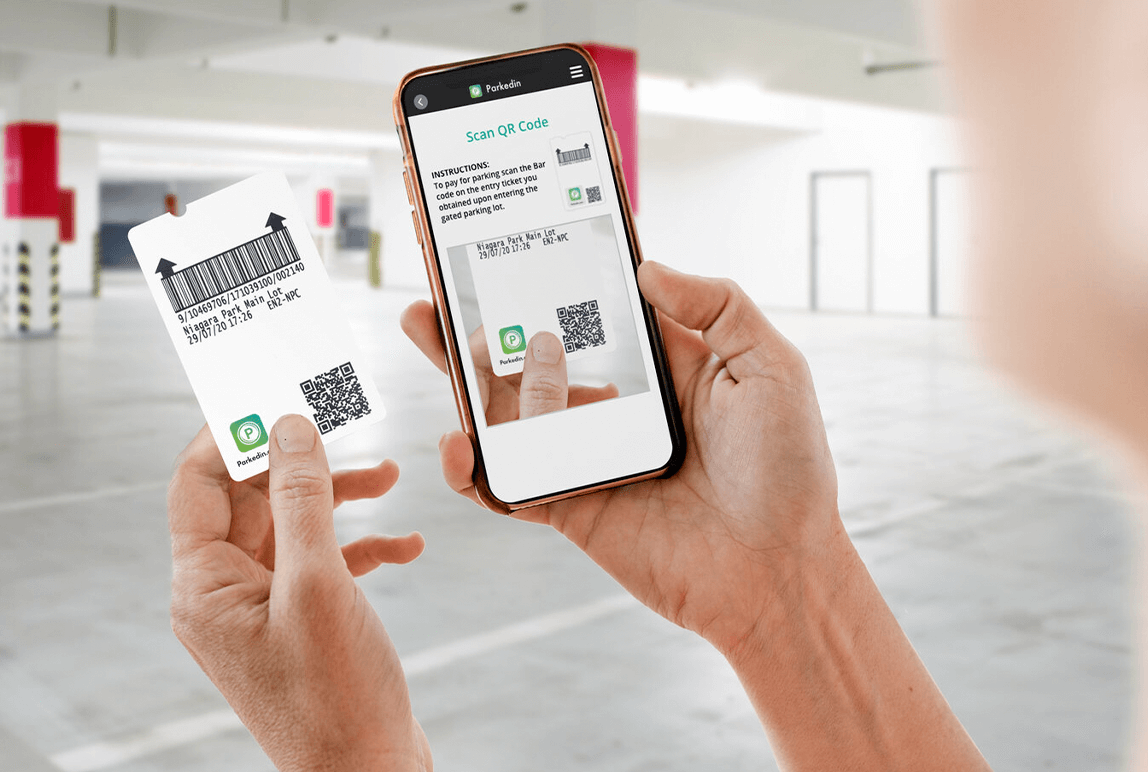
Mobile parking payment apps enable customers to pay for parking in real time using a mobile device or any web-enabled device. Not only do mobile parking payment apps provide your customers a seamless parking experience, they increase parking revenue for property owners. Mobile payment apps leave visitors to your facility with no excuse not to pay for or top up their parking sessions. With mobile payment, users can pay for parking on the go in a matter of seconds from wherever they are.
If you’re considering implementing a new, mobile parking app or upgrading your current app solution, here are a few features you should add to your list:
Easy registration: The mobile parking app should walk users step by step through the registration process.
Start, stop, extend time: The main purpose of mobile parking apps is the convenience of being able to remotely start, stop, and extend time for a parking session.
Reminder notifications: Mobile parking apps should remind users via SMS text message and/or push notifications when a parking session is about to expire. This way, if necessary, users can conveniently top up their session on the go. This is a core feature of mobile parking apps. A bonus app feature is enabling users to adjust the reminder time, allowing them to choose how long before expiration they want to receive reminders.
Easy and secure payment: The mobile parking app should feature an easy way for users to pay. It should also allow users to store multiple payment cards so they can choose how they’d like to pay before activating a parking session. The app should also abide by and maintain a Level 1 PCI compliance to ensure secure credit card processing.
Personal and business accounts: Mobile parking apps should provide users the option to create personal and business accounts with corresponding payment credentials. Ideally, separate tabs for personal and business accounts should be offered.
Multiple vehicle registration: Mobile parking apps should be able to store multiple vehicles with no maximum limit. For ultimate convenience, there should be an option to set a main vehicle. The mobile parking app should also be able to process payment for multiple active parking sessions at once.
Shortcuts: The mobile parking app should be integrated with mobile shortcuts, such as Siri. This allows users to get what they need without having to directly open the app.
Archives: For ultimate user convenience, mobile parking apps should archive receipts, as well as recent and “favourited” locations.
Touch ID system: Mobile parking apps, like other payment processing apps, should be integrated with a Touch ID system so that only authorized users can launch the application.
Multiple login options: Mobile apps should offer users a variety of login options that suit them best, such as Facebook and Touch ID.
Location services: The mobile parking app should feature a GPS locator for parking zones, such as parking lots or parking meters. This allows users to search for an address or parking lot on a map. Using GPS technology, the app should also be able to identify where a vehicle is parked in the event the driver forgets. Although mobile parking apps require a user’s location services feature to be turned on when in use, the app should also provide users the option to turn off their location services for privacy reasons.
Flexible rate structures: The mobile parking payment app should use a rights management system that allows for strong flexibility with rate structures. For example, it should be able to respect metered parking systems as well as other parking policies, such as maximum time limits, no-parking time periods, event parking rates, and more.
EV charging station display: Mobile parking apps should display which parking lots have EV charging stations.
Vocal assistance: Mobile parking apps should be integrated with virtual vocal assistants, such as Alexa and Google Assistant.
When investing in a mobile parking payment app, it’s important to choose a solution that is extremely user friendly and is regularly being enhanced to meet industry standards and consumer demands.
Share Article:

2 min read
Sustainable parking is no longer just a trend— it’s becoming a standard for modern facility management. By adopting environmentally responsible practices and technologies, parking facilities can reduce their environmental impact while improving overall efficiency.
5 min read
Payments mandates reflect the payment landscape, encouraging best practices and providing insight into where the world of payments is headed in the future. But as technology and payments adapt over time, so do the rules and regulations that guide these systems. As parking operators, when it comes to mandate changes that may impact how you process transactions, your payments provider and technology partners are there to support you and answer any questions you may have.
5 min read
The parking and mobility landscape is positioned for significant transformation in 2025, driven by technological advancements and changing consumer demands. As cities and businesses embrace innovation, staying ahead of key trends will be crucial for optimizing operations and enhancing user experiences. However, most importantly, understanding these trends will help organizations adapt and thrive in the evolving parking ecosystem.
5 min read
As we move into 2025, parking operations are being transformed by innovative technologies that streamline processes, enhance user experiences, and maximize profitability. From IoT-enabled solutions to dynamic pricing models, crafting a forward-looking parking technology and AI strategy is essential for staying competitive in this rapidly evolving industry. Below are the key technologies to consider:
6 min read
The parking and mobility industry is constantly evolving, making it challenging for newcomers and enthusiasts to keep pace. Staying informed about industry trends and key terminology is essential for parking facility managers, owners, and operators. This glossary is designed to simplify the jargon and provide clarity in this dynamic sector, serving as a valuable tool for anyone looking to deepen their understanding.
15 min read
Check out the top 25 solutions to empower your parking management strategy and position you for success in the upcoming year and beyond.
6 min read
Electric vehicles (EVs) are becoming increasingly popular in Canada as the country aims to achieve its 2050 zero-emissions goal. This makes now the ideal time for parking facility operators to prepare their facilities for this transition
5 min read
Understanding the revolution of Mobility-as-a-Service in parking and the optimal integrations for parking facilities to improve efficiency, sustainability, and customer satisfaction.
4 min read
Eight key themes set to shape the parking and mobility landscape, incorporating cutting-edge technologies and novel strategies.
5 min read
Technology Evangelist, Marc Saltzman, reviews Precise ParkLink’s newly launched Digital Control Centre (DCC).
13 min read
Check out the top 23 solutions you should consider when developing your parking management strategy in 2023…
5 min read
Learn about the five ways the metaverse can help futurize your parking management strategy.
3 min read
The metaverse is a seamless convergency of our physical and digital lives creating unified communities where we can exist virtually.
10 min read
The findings of the study verify the ability of a PGS to make the parking experience far more streamlined, consistent and user-friendly.
8.6 min read
Eight proven facts that will help you secure stakeholder buy-in for LPR in your next parking program's fiscal budget.
3 min read
The parking and mobility industry is leading the charge in last-mile experiences, leveraging parking facilities as a hub for mobility that spans far beyond parking.
5 min read
Urban mobility is a growing phenomenon that has and will continue to shift how we get from point a to point z and everywhere in between.
16 min read
Last-mile technology includes everything that makes the driver’s life simpler and more convenient and lets them get to their destination more quickly and efficiently.
5 min read
Parking pay stations (or kiosks) play an integral role in permitting someone to park at a facility.
10 min read
Parking facilities are becoming more sophisticated and promising greater customer experiences all the while continuing to deliver exceptional value to owners and operators.
4 min read
The impact of the COVID-19 pandemic on operators of commercial parking facilities have been significant. Fortunately, there are many creative ways property owners can repurpose their parking real estate.
2 min read
Recurring revenue from monthly permit subscriptions in most cases has , if not eliminated; causing parking technology providers to develop flexible, alternative permit options.
2 min read
Today’s parking technologies offer a number of benefits that help to reduce traffic and minimize pollution in our cities. Learn more about why our parking tools are a greener choice.
2 min read
Parking in a busy city can be stressful if the right systems aren't in place. Learn some of the ways smarter parking tools can improve parking in your city.
3 min read
With the pandemic shifting dynamics across every industry, it’s essential for parking operators to rethink their parking strategies now and into the future.
2 min read
Learn more about the benefits of implementing a SaaS parking solution and the cost-effective opportunities it provides for your overall parking strategy.
3 min read
For hospitals to operate efficiently, it’s important that patients, staff and visitors are able to come and go easily and safely. Learn more about how parking technology can help.
3 min read
ALPR technology can be deployed to manage both access to facilities — as in ticketless parking and frictionless parking — and enforcement within them.
3 min read
With air travel activity low and parking lots vacant, we’ve created a list of innovative ways to repurpose the parking resources within your airport into a new revenue stream.
ABOUT THE AUTHOR
Julianne Wilhelm
Marketing Manager
About Flowbird
Parkeon and Cale have merged to become FLOWBIRD: Urban Intelligence. Flowbird operates in over 5,000 cities and 70 countries, using a cloud-based solution to help clients ease traffic congestion and efficiently manage their transit systems. Our significant expertise and strong investment into research and development allow us to deliver products and digital services that will help us improve individual journey experiences and make our communities better.
Questions?
Fill out the form below and we will do our best to connect you with a suitable contact.
2 min read
Sustainable parking is no longer just a trend— it’s becoming a standard for modern facility management. By adopting environmentally responsible practices and technologies, parking facilities can reduce their environmental impact while improving overall efficiency.
5 min read
Payments mandates reflect the payment landscape, encouraging best practices and providing insight into where the world of payments is headed in the future. But as technology and payments adapt over time, so do the rules and regulations that guide these systems. As parking operators, when it comes to mandate changes that may impact how you process transactions, your payments provider and technology partners are there to support you and answer any questions you may have.
5 min read
The parking and mobility landscape is positioned for significant transformation in 2025, driven by technological advancements and changing consumer demands. As cities and businesses embrace innovation, staying ahead of key trends will be crucial for optimizing operations and enhancing user experiences. However, most importantly, understanding these trends will help organizations adapt and thrive in the evolving parking ecosystem.
5 min read
As we move into 2025, parking operations are being transformed by innovative technologies that streamline processes, enhance user experiences, and maximize profitability. From IoT-enabled solutions to dynamic pricing models, crafting a forward-looking parking technology and AI strategy is essential for staying competitive in this rapidly evolving industry. Below are the key technologies to consider:
6 min read
The parking and mobility industry is constantly evolving, making it challenging for newcomers and enthusiasts to keep pace. Staying informed about industry trends and key terminology is essential for parking facility managers, owners, and operators. This glossary is designed to simplify the jargon and provide clarity in this dynamic sector, serving as a valuable tool for anyone looking to deepen their understanding.