
Contactless Parking Payment Systems
Posted: Aug, 28, 2025 5:00PM ET • 6 min read
Contactless Parking Payment Systems
Contactless parking payment systems are changing how drivers enter, pay, and exit parking facilities. Rather than relying on cash, paper tickets, or manual payment steps, these systems connect digital payment options with access-control equipment and parking software. When designed around the customer journey, they can make parking easier for drivers while giving operators a more efficient way to manage payments, access, and facility activity.
What Is a Contactless Parking Payment System?
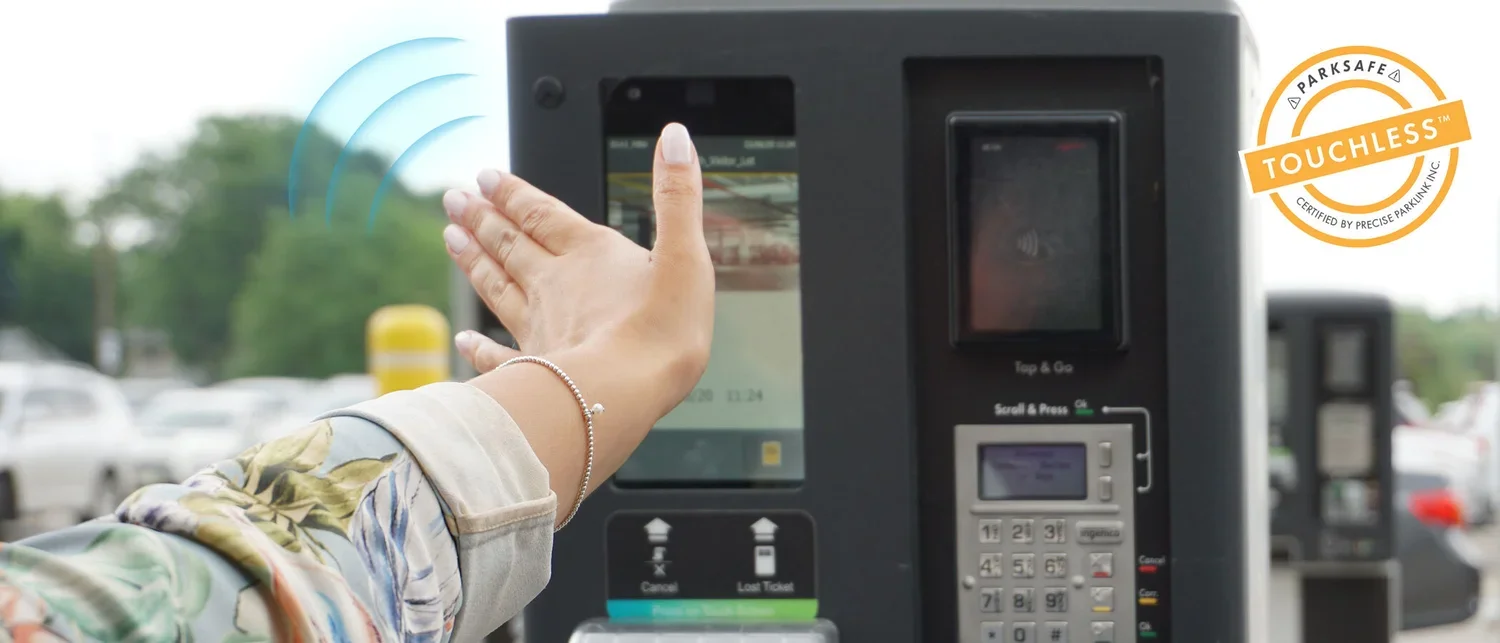
A contactless parking payment system allows drivers to pay for parking with little to no physical interaction with parking equipment. Depending on the facility, drivers may use mobile payments, contactless payment terminals, parking app, QR codes, radio frequency identification (RFID), or license plate recognition (LPR). These technologies can work individually or together in an automated parking system or smart parking system, connecting entry, parking-session tracking, payment, and exit in a more seamless process.
How Does Contactless Parking Technology Work?
Contactless parking technology combines payment methods, vehicle identification, access-control equipment, sensors, and parking software. The exact setup depends on the parking facility and its existing infrastructure, but the goal is the same: help drivers move from entry to payment and exit with fewer unnecessary steps.
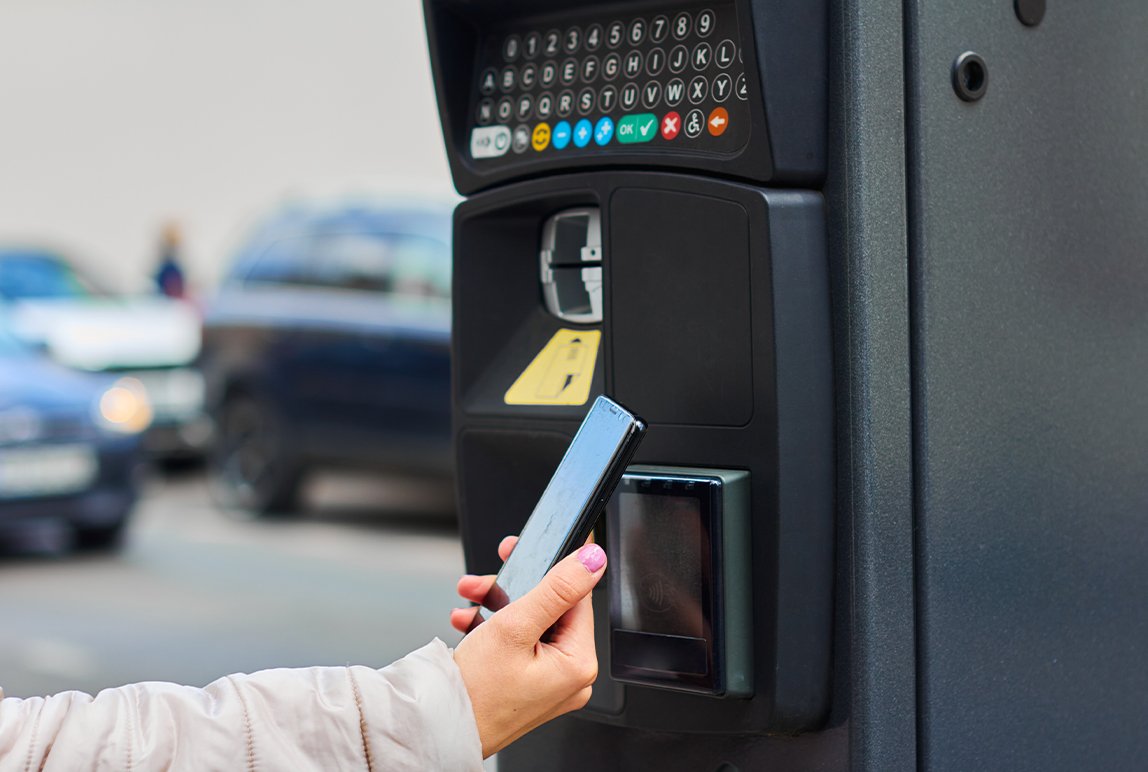
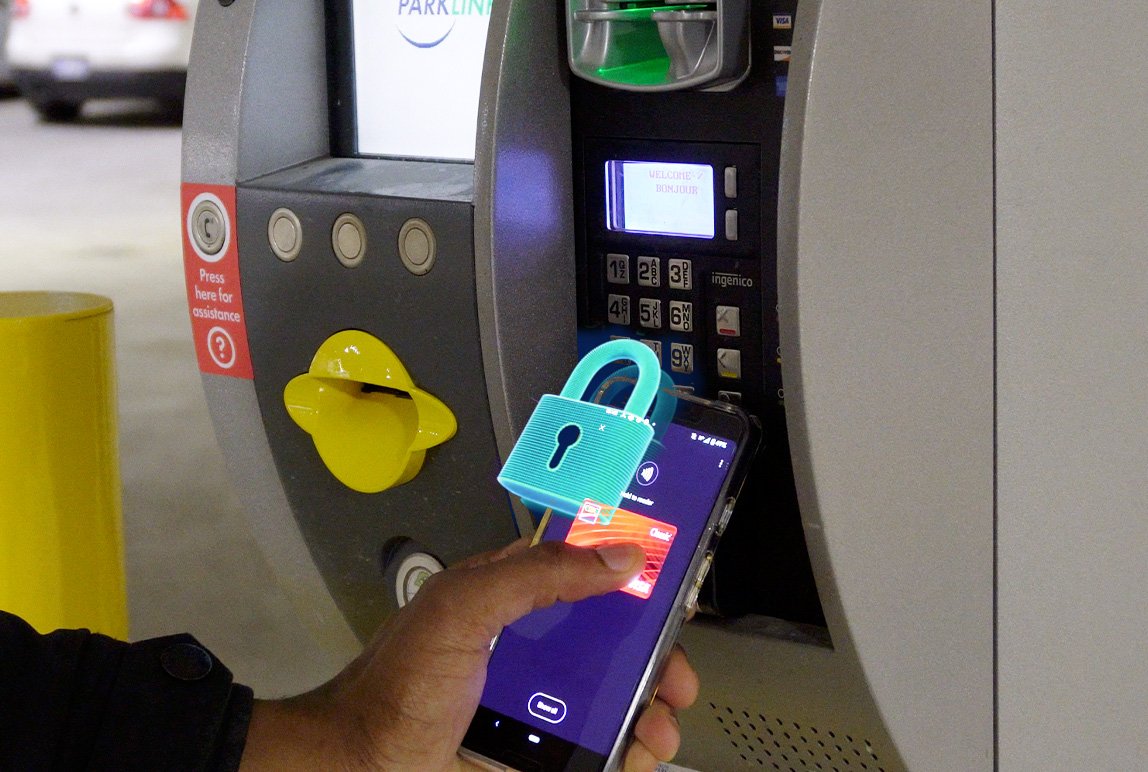
Tap-to-pay and NFC: A contactless payment terminal uses Near Field Communication (NFC) so a driver can tap an eligible credit card, debit card, smartphone, or digital wallet to pay.
Mobile payments and QR codes: A parking app can allow drivers to start, extend, and pay for a parking session from their smartphone. App-free QR codes can also direct drivers to a secure mobile web page without requiring a download.
RFID access: RFID windshield tags communicate with overhead readers to verify registered parkers. In a gated facility, the system can use that identification to grant approved vehicles access.
License plate recognition (LPR): A license plate reader camera identifies a vehicle at entry or exit. When LPR is connected with parking software, payment, and access control, the plate can be matched to a parking session and support a more hands-free experience.
IR sensors and vehicle detection: An infrared (IR) sensor or induction loop can detect when a vehicle is present and trigger connected cameras, displays, or access-control equipment. This helps the parking system respond automatically as a vehicle moves through the facility.
Together, these technologies can create a connected parking experience that fits the needs of a surface lot, gated garage, hospital, commercial property, or other parking environment.
Benefits of Contactless Payments for Parking Operators
Contactless payments can improve parking operations while also creating a smoother customer experience. The benefits depend on the technology and facility setup, but several advantages are common across modern parking operations: Digital payments and automated access reduce the time drivers spend handling tickets, searching for cash, or completing manual payment steps. This can help reduce lane delays and traffic buildup during busy periods
Offering mobile payments, tap-to-pay, QR codes, or a parking app gives drivers familiar and flexible ways to pay. Clearer payment choices and fewer steps can make the experience more convenient from entry to exit.
Greater use of digital transactions can reduce the need for physical equipment and ongoing maintenance by minimizing reliance on paper tickets, coins, cash processing, and, in some facilities, a traditional parking kiosk.
Connected systems can automate credential validation, parking-session records, and gate access. This improves operation by allowing staff to focus more on customer support, exceptions, and overall facility management.
Parking software can bring together transaction information, parking-session activity, occupancy patterns, and stay duration. Operators can use this data to better understand how the facility is being used and support more informed operational decisions.
What to Consider Before Implementation?
Before introducing smart parking solutions, operators should review both the facility and the customer journey. A successful setup should integrate with the facility, provide convenient payment options, and remain manageable after launch.
Key considerations include:
Existing equipment: Review gates, pay stations, readers, cameras, network connections, and current parking software to determine what can be integrated and what may need to be upgraded or replaced.
Payment options: Select methods based on how customers use the facility. Depending on the location, a combination of tap-to-pay, mobile payments, parking apps, and QR codes may provide greater convenience and flexibility rather than relying on a single method.
User experience: Provide clear signage and simple instructions so drivers understand what to do at entry, during their stay, when paying, and at exit. The technology should make the parking journey easier, not add unnecessary steps.
Support and maintenance: Consider installation, software integration, system monitoring, maintenance, and access to technical support. A provider that can coordinate equipment, parking software, and ongoing management services can help support long-term system reliability.
Why Are Mobile and Touchless Parking Payments Growing?
Consumers increasingly use contactless cards, smartphones, digital wallets, and online payment tools in everyday transactions. As these methods become more familiar, drivers expect the same convenience when parking. Mobile and touchless payments meet these expectations by providing simple, flexible ways to pay without relying only on cash or paper tickets. As payment preferences continue to evolve, contactless technology is becoming a standard part of the modern parking experience.
The Future of Contactless Parking
Contactless payment is part of a broader shift toward smarter, more connected parking operations. Technologies such as mobile payments, RFID, license plate recognition, access control, sensors, and parking software are increasingly being integrated through centralized, cloud-based platforms. Rather than operating as separate systems, these technologies can connect payment, access, and reporting functions to create a more integrated parking environment.
As technology, operational needs, and customer expectations evolve, flexibility will become increasingly important. Smart parking solutions should be able to accommodate new payment methods, integrate with existing infrastructure, and adapt to different facilities and user needs. The future of contactless parking is about creating a seamless, connected experience while giving operators the technology and information they need to manage their facilities effectively.
Talk to a parking technology expert →
References
Commuter's Companion. (n.d.). Simplified parking: Navigating payment methods and apps. https://commuterscompanion.com/blog/parking-tips/simplified-parking-navigating-payment-methods-and-apps/
HONK. (2026, January 19). Why contactless parking payment is replacing cash and credit cards. https://www.honkmobile.com/blog/why-contactless-parking-payment-is-replacing-cash-and-credit-cards/
Precise ParkLink. (2021, February 17). Improving day-to-day parking interactions one wave at a time. https://preciseparklink.com/news/improving-day-to-day-parking-interactions-one-wave-at-a-time2
T2 Systems. (2021, June 15). 4 reasons to accept contactless parking payments. https://www.t2systems.com/resource/4-reasons-to-accept-contactless-parking-payments/
Share Article:
Featured Articles







ABOUT THE AUTHOR

Andrew Sgorlon
Technical Sales Support Manager
Andrew has more than 17 years of experience with automated parking solutions, being involved with the fist automated PARCS installed by Precise ParkLink in 2000. Andrew is one of Precise ParkLnk’s SMEs on all Precise ParkLink products and services. As the Greater Toronto Airports Authority’s (GTAA) Senior Account Manager (since 2011), Andrew has been instrumental in Precise ParkLink’s on-going operational support at Toronto Pearson. In this capacity, he supports Precise ParkLink’s onsite staff and is the sales/equipment representative at all GTAA parking operations meetings. Andrew is also the lead account manager for University of Toronto, Centennial College, and Durham College. Technology and automation are Andrew's work passion; he continuously looks for ways to improve and evolve the PARCS industry.

Questions?
Fill out the form below and we will do our best to connect you with a suitable contact.